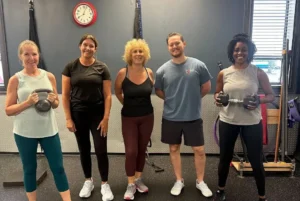
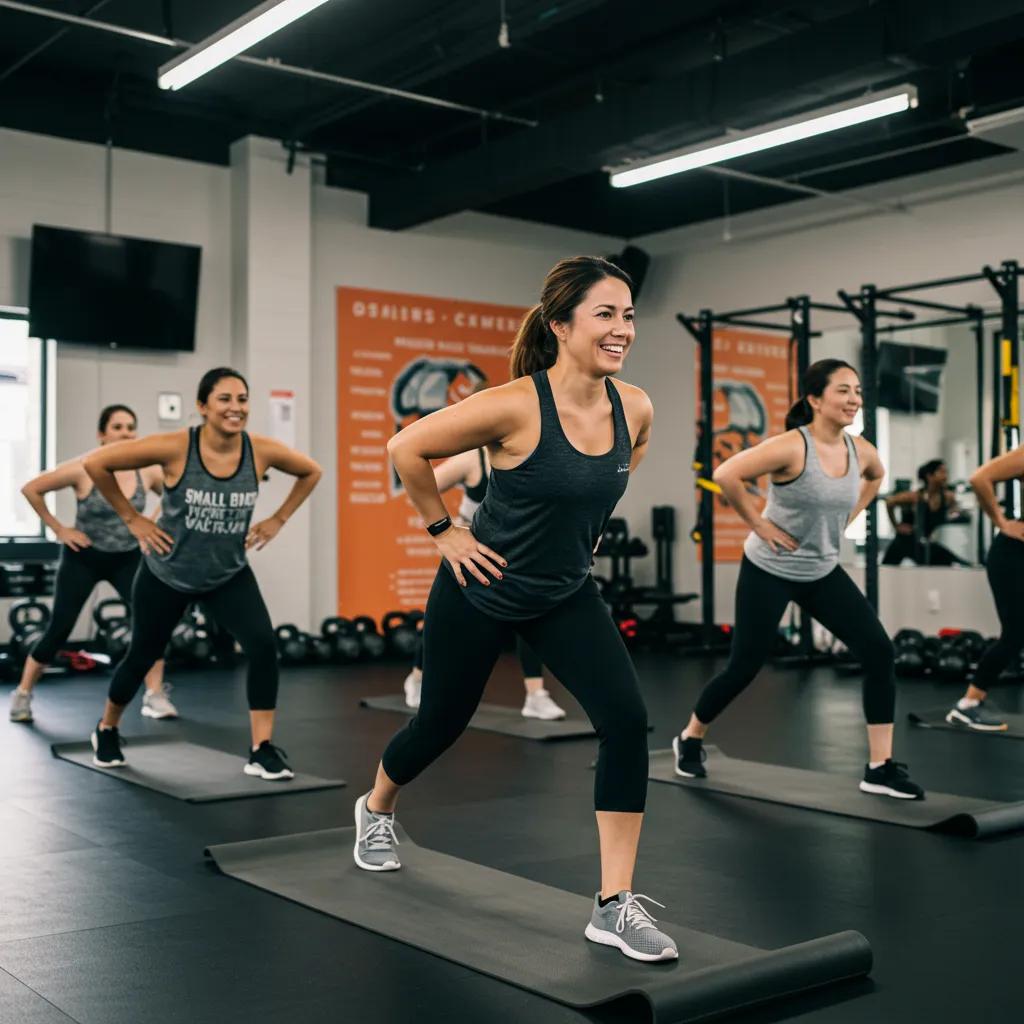
in Buckhead combine focused coaching and peer support to create a structure that reliably boosts motivation and drives fitness results. These sessions blend group fitness dynamics with near-personalized training, using social accountability, expert feedback, and progressive programming to increase attendance, effort, and long-term adherence. Readers will learn why small group personal training in Buckhead often outperforms solo workouts and large classes for consistency, how psychological mechanisms like habit formation and social reward operate in groups, and what to expect when joining a cohort-based program.
This article walks through the key benefits, the psychological drivers behind group motivation, a brief example of a branded program approach, local community supports in Buckhead, and concise answers to common questions. Throughout, practical tips and evidence-aligned mechanisms guide you toward choosing and sustaining the right small group workout classes in Buckhead.
What Are the Key Benefits of Small Group Training in Buckhead?
Small group training in Buckhead delivers several complementary benefits by combining coaching, cohort consistency, and scheduled sessions to enhance motivation and results. The mechanism is straightforward: expert coaching targets technique while peers create social expectations, and together they improve attendance and effort. This balance of personalization and community yields more consistent progress than exercising alone and often offers a lower cost-per-coach than one-on-one training. Below is a concise list of top benefits and a quick comparison for clarity.
Small group training offers these primary advantages:
- Social accountability improves consistency and makes scheduled workouts easier to keep.
- Near-personalized coaching corrects form, reduces injury risk, and accelerates progress.
- Community support builds confidence, encourages regular attendance, and celebrates milestones.
These benefits explain why many Buckhead residents prefer to both solo and very large class formats. The next section unpacks the social accountability mechanisms that drive these outcomes.
How Does Social Accountability Enhance Motivation in Group Fitness?

Social accountability is the mechanism by which peers and scheduled sessions create mutual expectations that increase attendance and effort. Members commit to set times and cohorts, and that commitment becomes a social contract that reduces missed sessions. Coaches reinforce accountability with check-ins and progress reviews, and small rituals—like brief pre-workout greetings—strengthen group norms. To use this mechanism, try pairing with a consistent training buddy and setting short-term shared that the group can track together.
These social practices lead naturally to personalized attention, which further sustains motivation by making progress visible and personal training.
Why Is Personalized Attention Important in Small Group Workouts?
Personalized attention in small groups allows coaches to tailor movements, scale intensity, and offer corrective feedback while keeping the group engaged. This mechanism improves safety and accelerates measurable progress because trainers can spot compensations early and provide immediate cues. Compared with large classes, small groups let coaches balance individualization with group dynamics, preserving both efficiency and specificity. For members, personalized feedback builds trust and confidence, which in turn increases adherence and willingness to tackle harder progressions.
Understanding personalization helps explain how groups maintain momentum after initial enthusiasm fades.
How Does Group Exercise Build Confidence and Consistency?
Group exercise builds confidence through vicarious learning and repeated mastery experiences observed among peers. Seeing others progress creates a template for what is achievable, and positive reinforcement from coaches and teammates reinforces skill acquisition. Regular attendance in a cohort provides multiple mastery moments each week, which strengthens self-efficacy and embeds exercise into routine. Celebrating small wins—like improved reps or cleaner technique—creates a feedback loop of motivation that sustains over months.
These psychological gains set up the next layer: how group classes influence .
| Benefit Mechanism | How It Works | Practical Outcome |
|---|---|---|
| Social Accountability | Scheduled cohorts and peer expectations | Improved session attendance and consistency |
| Personalized Coaching | Trainer feedback and scalable exercises | Safer progression and faster skill gains |
| Community Support | Peer encouragement and shared milestones | Increased confidence and long-term adherence |
This table highlights how distinct mechanisms produce tangible motivational outcomes in small group formats. The connections above guide daily practice and program selection in .
How Do Small Group Workout Classes Improve Psychological Motivation?
Small group workout classes improve psychological motivation by activating social, competitive, and coaching-driven reward systems that convert effort into habit. Social accountability triggers extrinsic drivers that become internalized, friendly competition sharpens focus and intensity, and expert coaching creates clear feedback loops that increase self-efficacy. Together these mechanisms support habit formation by pairing cue (scheduled class), routine (workout), and reward (social recognition and progress). Below is a list of with brief practical notes.
Key psychological mechanisms include:
- Social accountability that converts attendance into a social norm.
- Friendly competition that elevates effort without undermining support.
- Expert coaching that clarifies goals and accelerates confidence.
These mechanisms interact: social norms make competition feel supportive, and coaching helps translate competitive spikes into fitness programs.
What Role Does Friendly Competition Play in Boosting Workout Drive?
Friendly competition raises effort and engagement by creating short-term performance targets within a supportive group context. Leaderboards, partner challenges, or rep goals encourage members to push while keeping comparisons positive and constructive. The caveat is that competition must be framed as personal bests and mutual encouragement to avoid discouragement. When designed well, competitive elements convert occasional peak efforts into higher baseline intensity across.
Framing competition positively helps coaches use it as a tool for measurable progress rather than a demotivating comparison.
How Does Expert Coaching Influence Goal Setting and Achievement?

Expert coaching transforms vague ambitions into structured, achievable goals by using targeted feedback, progressive load, and micro-targets. Coaches set weekly objectives, monitor technique, and adjust scales so each participant can experience steady wins. This structured approach builds self-efficacy as members repeatedly meet targets, and the feedback loop accelerates motivation. By translating big-picture goals into consistent, measurable steps, coaching turns intention into fitness programs.
Clear coaching practices also provide ways to break plateaus through fitness programs and accountability.
In What Ways Does Group Support Help Overcome Workout Plateaus?
Group support overcomes plateaus by combining varied programming, peer-driven challenge, and accountability that encourages persistence through temporary setbacks. Coaches can introduce periodized phases or challenge weeks that refresh stimulus, while peers offer ideas, celebrate small improvements, and troubleshoot obstacles together. Shared problem-solving brings diverse strategies to one person’s plateau, which increases the likelihood of finding an effective solution. A combination of program variation and social reinforcement is often enough to reactivate .
This collaborative approach ties back to how fitness programs and cohort consistency foster long-term adherence.
Small Group Classes in Buckhead: Boost Motivation & Results
E5Fit serves as a concrete example of how a branded small group can organize coaching, cohorts, and progress tracking to support motivation. Conceptually, programs like E5Fit emphasize consistent cohorts, coached progressions, and measurable milestones to convert attendance into habit. The methodology focuses on blending individual technique correction with group-driven accountability so members feel supported without losing personalization. Below is a concise mapping of program features to their motivational impact.
E5Fit-style program features and motivational impact:
- Coach feedback and movement scaling increase confidence and safety.
- Cohort consistency (same group over time) builds social bonds and mutual accountability.
- Progressive programming with short-term milestones creates regular wins and visible progress.
This example illustrates how a structured in Buckhead can intentionally design elements to boost long-term exercise adherence.
| Program Element | Feature | Motivation Impact |
|---|---|---|
| Coach Feedback | Real-time cues and scaling | Faster skill gains; reduced injury risk |
| Cohort Consistency | Repeating the same cohort | Stronger social bonds; higher attendance |
| Progress Tracking | Measurable short-term milestones | Regular motivation boosts and clarity of progress |
The table maps typical program components to the specific motivational benefits they support and clarifies why an organized approach strengthens adherence.
How Does the E5Fit Methodology Foster Long-Term Exercise Adherence?
E5Fit’s conceptual methodology fosters adherence by aligning scheduled cohorts with progressive programming and coach-led feedback loops. Regular sessions create reliable cues that form habits, while progressive overload and milestone tracking provide ongoing motivation. Cohort continuity builds social expectation and peer support, which further solidifies attendance patterns. Together these elements convert sporadic workouts into a sustainable routine with measurable outcomes that reinforce continued participation.
Recognizing these design principles helps prospective members evaluate local about us and sustainability.
What Can You Expect from an E5Fit Small Group Class Experience?
Typical expectations in an include a guided warm-up, coached work sets with scaling options, and brief community check-ins that emphasize progress. Trainers observe and cue technique, offer scalable intensity, and encourage peer encouragement throughout the session. Members usually track short-term targets and receive periodic progress reviews that highlight improvements and set the next goals. This structure balances efficiency with individualized attention while intentionally cultivating group cohesion.
These class elements illustrate how program structure translates into both immediate engagement and longer-term.
What Success Stories Highlight E5Fit’s Impact on Motivation?
Success stories for cohort-based programs typically follow the pattern: initial struggle with consistency, onboarding into a coached small group, progressive gains, and sustained attendance driven by social support. While specific client narratives should always be consented and factual, the general case-study format—challenge, intervention, outcome—effectively communicates motivational impact. Programs like can document improvements in attendance, confidence, and adherence without overstating individual results.
Using real, consented organized by challenge and outcome strengthens credibility and illustrates motivational mechanisms in action.
How Does the Buckhead Fitness Community Support Sustained Motivation?
The Buckhead fitness community amplifies motivation by offering events, challenges, and multiple cohort-based studios where social ties can form across venues. Community-level supports work by expanding accountability beyond a single class: local events create shared milestones, social groups provide off-day touchpoints, and studio networks offer varied formats that keep training fresh. For residents, engaging with a tribe creates overlapping commitments that raise the cost of dropping out. Below is a short list of community resources and ways to tap them.
Ways to connect with Buckhead fitness supports:
- Try introductory or trial cohort sessions to meet peers and test fit.
- Join local challenges or charity events that create short-term shared goals.
- Use social platforms and studio meetups to extend accountability outside class.
These community ties provide a broader scaffold that helps individuals maintain habits despite life changes. The next subsections describe where to find a fitness programs and how events boost motivation.
Where Can You Find a Supportive Fitness Tribe in Buckhead?
Finding a fitness tribe in Buckhead starts with trying intro classes, attending open-house sessions, and joining local social or neighborhood groups focused on health. Community boards, social media groups, and studio intro events are common ways cohorts form and recruit consistent members.
When exploring options, prioritize cohorts with regular schedules and clear coaching cues, as these predict stronger social bonds. Trialing several classes helps identify a group whose culture and intensity match personal drivers.
Joining an aligned tribe makes it easier to convert attendance into a stable habit over fitness programs.
How Do Local Fitness Events and Challenges Boost Group Motivation?
Local events and time-bound challenges create external deadlines and shared objectives that spike collective effort and focus. Participating in a community challenge provides visible progress markers and public commitment, which increases accountability. Events also deliver social celebrations—awards, recognition, or group outings—that reinforce belonging and make persistence rewarding.
Organizers can structure challenges with staggered milestones so members experience multiple wins, maintaining .
These periodic spikes of communal effort help reset motivation and reconnect members to fitness programs.
FAQ: What Are Common Questions About Small Group Training Motivation in Buckhead?
What Are the Benefits of Small Group Training Compared to Solo Workouts?
Small group training offers accountability, consistent scheduling, and cost-efficient access to coaching, while solo workouts provide full customization and flexibility. Groups increase attendance through social expectations and deliver near-personalized feedback, whereas solo training maximizes bespoke program design. For many people, the trade-off favors groups when adherence and consistent progress are the primary goals. Choosing depends on whether you prioritize or individualized autonomy.
This comparison highlights why many Buckhead residents pick fitness programs to sustain habit formation.
How Do Group Fitness Classes Keep You Motivated Over Time?
Group classes keep motivation by combining routine scheduling, measurable progress markers, and social reinforcement into a repeatable habit loop. Habit cues (calendar times), routines (structured sessions), and rewards (peer recognition and progress) create a durable cycle. Practical strategies include habit stacking, tracking short-term wins, and pairing with an accountability partner. These tactics convert initial enthusiasm into sustained practice through predictable structure and social obligations. For those interested in enhancing their fitness journey, fitness programs are available to provide the necessary structure and support.
Applied consistently, these approaches support long-term visible results.
Are Small Group Workouts Effective for Weight Loss and Results?
Small group workouts can be effective for weight loss and performance when paired with sound programming and nutritional consistency. The format supports adherence and progressive overload—both fundamental to results—while social accountability helps maintain the frequency required for change. Outcomes vary by individual factors such as diet, baseline fitness, and consistency, so results are not guaranteed for everyone. and adjust programming tend to produce better long-term outcomes.
This balanced view underscores the role of consistency and holistic habits alongside .
How Can You Find Affordable Group Personal Training in Buckhead?
To find affordable group personal training, seek out introductory offers, off-peak classes, bundled session packages, and community-center cohorts that spread coaching costs across participants. Ask studios about sliding scales, group discounts, or seasonal promotions when trialing classes.
Comparing multiple programs and trying short commitments reduces risk and helps identify the best value for your needs. Consider an introductory session at an example program to evaluate coaching quality and cohort fit before committing long-term.
These search tactics help you locate sustainable, cost-effective options in Buckhead.
Conclusion
Engaging in small group personal training in Buckhead offers a unique blend of social accountability, expert coaching, and community support that significantly enhances motivation and results. This structured approach not only fosters consistency but also accelerates personal progress through tailored feedback and shared experiences. By participating in these dynamic sessions, you can transform your fitness journey into a sustainable habit that yields long-term benefits. Discover how our small group training programs can elevate your fitness experience today.