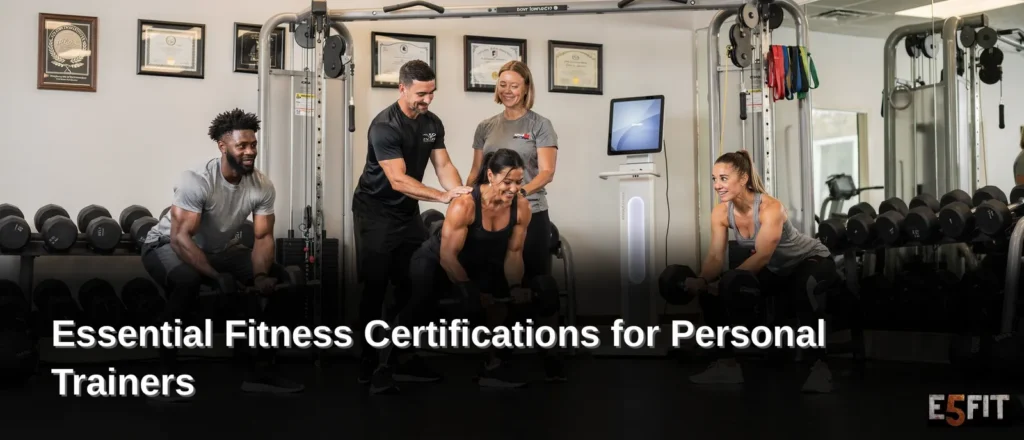
Certification through NASM or NSCA-CPT is essential, backed by NASM’s network of over 1.9 million fitness professionals worldwide. Trainers should also pursue specialized credentials like Precision Nutrition Level
Qualified personal trainers hold accredited certifications such as NASM or NSCA-CPT, credentials built on scientific coursework and exams covering anatomy, exercise programming, and behavior change. Buckhead clients aged 40+ should also confirm CPR/AED certification, injury-rehabilitation experience, and a trainer-to-client ratio supporting individualized attention, such as E5FIT’s 6:1 small-group model.
Key Takeaways
Personal trainers need nationally recognized certifications like NASM or NSCA-CPT to establish credibility.
NSCA-CPT certification demonstrates comprehensive scientific foundation and evidence-based fitness principles to clients.
Nutrition certifications, such as Precision Nutrition Level 1, enhance trainer qualifications and client outcomes.
Distinguish between certificates and certifications; only recognized certifications carry professional weight in fitness industry.
Personal trainers need nationally recognized certifications like NASM or NSCA-CPT to establish credibility.
NSCA-CPT certification demonstrates comprehensive scientific foundation and evidence-based fitness principles to clients.
Nutrition certifications, such as Precision Nutrition Level 1, enhance trainer qualifications and client outcomes.
Distinguish between certificates and certifications; only recognized certifications carry professional weight in fitness industry.
Which Certifications Prove a Trainer Is Qualified?
NCCA-accredited credentials mark the recognized gold standard for entry into personal training. Buckhead residents evaluating a coach should treat this accreditation as a baseline, not a bonus. Trainers lacking it may still have knowledge, but clients lose an independent, third-party check on that knowledge. Two organizations dominate this standard: NASM and NSCA. The NSCA-CPT credential, in particular, demands a scientific foundation in exercise principles, covering biomechanics, program design, and injury prevention before a candidate ever passes the exam.
Is a certification the same as a certificate?
No. A certification is a professional credential awarded by an independent organization only after a candidate passes a standardized exam. A certificate, by contrast, often comes from a college course and reflects completed coursework rather than tested competency. For someone comparing qualified personal trainers in Atlanta, that distinction separates verified skill from a classroom credit.
What credentials should clients look for locally?
Look for staff holding recognition from established national bodies rather than in-house-only training. E5FIT coaches carry credentials from NASM, ACE, and the International Sports Sciences Association (ISSA):
NASM — NCCA-accredited, industry-recognized standard
ACE — broad-based exercise science credentialing
ISSA — specialized coaching and programming certification
NASM — NCCA-accredited, industry-recognized standard
ACE — broad-based exercise science credentialing
ISSA — specialized coaching and programming certification
That combination reflects expert fitness coaching grounded in tested, evidence-based fitness certifications rather than informal experience alone.
Why Do Specialty Credentials Matter for Results?
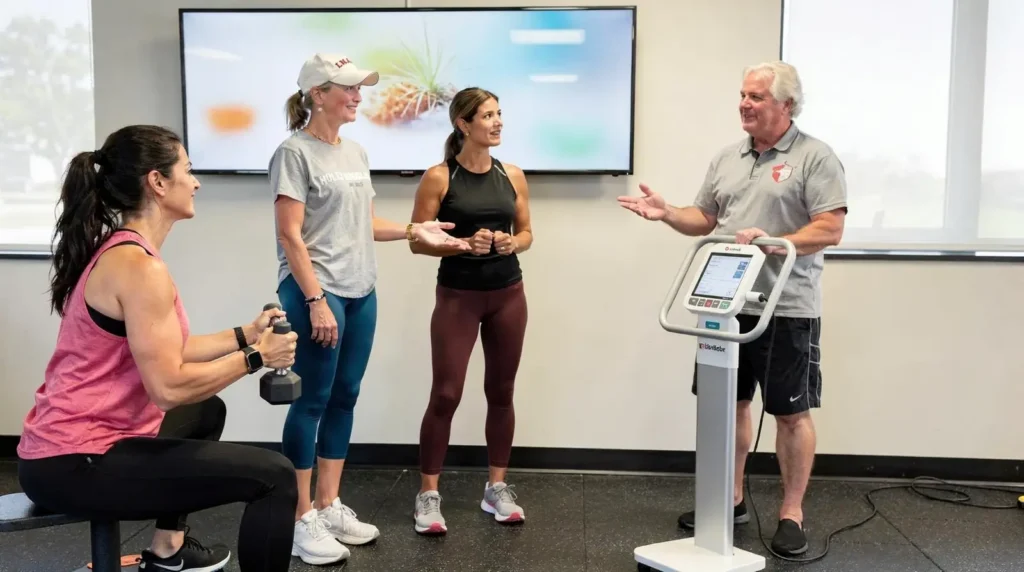
Specialty credentials separate guesswork from science. A trainer holding fitness certifications in nutrition, movement, or behavior change brings tested methods to every session, not trial and error. For adults over 40 managing joint issues, metabolism shifts, or past injuries, that distinction changes outcomes.
Credentialing bodies require coaches to master specific domains before working with clients.
What should a qualified trainer actually know?
Foundational training covers strength conditioning, cardiovascular exercise, and the physiology of muscles, including stretching mechanics, across clients of any age. Beyond exercise programming, qualified personal trainers often add nutrition-specific credentials. Precision Nutrition Level 1 certification, for example, signals a coach can guide food and lifestyle protocols alongside workouts. That combination matters for anyone balancing fat loss, energy, and long-term joint health.
Does certification actually change the coaching itself?
Credentialed coaches apply knowledge of anatomy, physiology, cardiorespiratory fitness, and behavioral psychology to drive lasting change rather than short-term fixes. cite-3 This blend of science and behavior science is what separates expert fitness coaching from generic workout instruction. Client accounts from Buckhead confirm this pattern in practice, describing trainers holding recognized credentials such as:
NASM CPT (National Academy of Sports Medicine)
ACE (American Council on Exercise)
ISSA (International Sports Sciences Association)
NASM CPT (National Academy of Sports Medicine)
ACE (American Council on Exercise)
ISSA (International Sports Sciences Association)
Those credentials, verified through real client experience, indicate a program built on tested standards rather than improvisation.
What Should You Ask Before Choosing a Trainer?
Five questions separate a sound investment from a wasted membership: contract terms, age-specific programming, credentials, coaching philosophy, and long-term outcomes. Adults over 40 face higher injury risk from generic programming. A mismatched gym contract can lock in months of wasted payments. Direct answers to these questions reveal whether a studio actually understands mature clients or repackages standard gym offerings.
Does the studio require a long-term contract?
E5Fit does not require contracts, giving members flexibility as goals or health circumstances shift. That structure matters for adults managing unpredictable schedules, recovery timelines, or evolving fitness needs. A no-contract policy signals confidence in results rather than reliance on locked-in fees.
Is the program actually built for adults over 40?
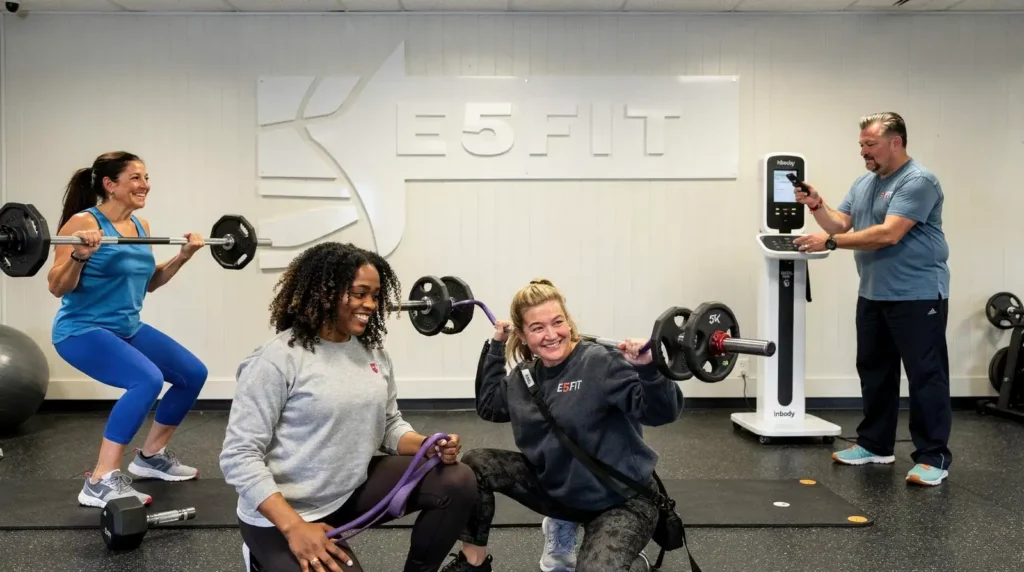
E5Fit was founded specifically to redefine fitness for the 40-plus demographic, not adapted afterward from a younger-client model. Small group programming targets adults 40 and older who want an alternative to traditional gym settings. Fitness Programs Personal training sessions center on helping this age group move, feel, and look better over time. cite-5
Before signing anywhere, prospective members should ask about:
Fitness certifications held by coaching staff
Whether qualified personal trainers design age-appropriate progressions
How expert fitness coaching addresses joint health, recovery, and injury history
Contract length and cancellation terms
Fitness certifications held by coaching staff
Whether qualified personal trainers design age-appropriate progressions
How expert fitness coaching addresses joint health, recovery, and injury history
Contract length and cancellation terms
When selecting a personal trainer, prioritize certifications from accredited organizations and evidence of continuing education in exercise science and behavior change. The most effective trainers combine formal qualifications with demonstrated expertise in program design, assessment, and client accountability. At E5FIT, our certified coaching team embodies this standard, delivering science-backed training across 1-on-1 and small-group formats. Your trainer’s credentials directly influence your results—invest in expertise that aligns with your goals and values.
FAQ
What certifications should a personal trainer have?
Look for NCCA-accredited credentials like NASM or NSCA-CPT, which require passing exams covering anatomy, exercise programming, and behavior change. E5FIT coaches also hold ACE and ISSA certifications.
What is the difference between a certification and a certificate?
A certification is awarded by an independent organization after a candidate passes a standardized exam. A certificate reflects completed coursework, often from a college class. Only certifications carry professional weight in the fitness industry.
Why do specialty credentials like nutrition certifications matter?
Specialty credentials such as Precision Nutrition Level 1 bring tested, evidence-based methods to sessions instead of guesswork. This matters especially for clients managing joint issues, metabolism shifts, or past injuries.
Facts
E5Fit is located in Atlanta, GA, US.
E5Fit has 5 employees.
E5Fit offers Small-Group Personal Training.
E5Fit offers 1-on-1 Personal Training.
E5Fit does not require contracts.
E5Fit is located in Buckhead, Atlanta, Georgia.
E5Fit was founded with a vision to redefine fitness for the 40+ demographic.
Eric is Precision Nutrition Level 1 certified.
E5Fit is located in Atlanta, GA, US.
E5Fit has 5 employees.
E5Fit offers Small-Group Personal Training.
E5Fit offers 1-on-1 Personal Training.
E5Fit does not require contracts.
E5Fit is located in Buckhead, Atlanta, Georgia.
E5Fit was founded with a vision to redefine fitness for the 40+ demographic.
Eric is Precision Nutrition Level 1 certified.
Conclusion
Choosing a qualified personal trainer comes down to verifying the attributes that actually prove competence: NCCA-accredited certification (NASM, NSCA-CPT), specialty credentials like Precision Nutrition Level 1, and a coaching structure built around individualized attention rather than generic programming. Together, those attributes—accredited certification, specialized nutrition and movement training, and a no-contract, small-group model—are what distinguish expert fitness coaching from informal instruction, especially for adults over 40 managing joint health, metabolism shifts, or past injury. Buckhead and Atlanta residents evaluating a coach can use this same credential checklist before committing to any studio or gym. E5FIT’s certified coaching team reflects this exact standard, making its personal training programs a sound next step for anyone ready to train with a verified, qualified coach.