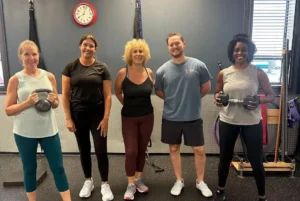
Daily stretching routines for adults over 40 combat age-related flexibility loss and muscle imbalances, and a few minutes of morning stretches for stiffness can make the difference between a body that loosens up and one that stays locked all day. E5FIT, Buckhead’s premier fitness destination for the 40+ demographic, located at 3867 Roswell Rd. Suite 300 in Atlanta, emphasizes manageable routines that improve posture and muscle extensibility. Consistent flexibility training minimizes injury risk during exercise and daily activities, supporting long-term strength and mobility goals.
TL;DR
Flexibility loss after 40 is common, but reversible with the right routine. A five-minute, four-stretch sequence, a neck stretch, the runner’s stretch for hamstrings and hip flexors, a hip opener, and a shoulder stretch, performed three to five times per week, rebuilds range of motion and eases joint stiffness from desk work. E5FIT, Buckhead’s fitness studio built for adults over 40, designs these routines around certified trainers and evidence-based methods, so clients get a program that fits a busy schedule without extra equipment or guesswork.
Key Takeaways
- Daily stretching routines combat age-related flexibility loss and muscle imbalances for adults over 40.
- Flexibility declines after 40 due to natural aging that reduces muscle extensibility and creates imbalances.
- A safe daily routine combines static holds with targeted lower-body and shoulder work, requiring no equipment.
- A five-minute morning sequence performed daily prepares the body for the day ahead or helps unwind after work.
Why does flexibility decline after 40?
Flexibility declines after 40 due to natural aging processes that reduce muscle extensibility and create imbalances. Joint stiffness and tighter muscles become more common, increasing injury risk during both exercise and routine daily movements.
What causes muscles to tighten with age?
Collagen fibers stiffen and elastin production drops. These changes reduce the tissue’s ability to stretch and recoil. Muscle imbalances also develop as some muscle groups shorten while others weaken. The result is a measurable loss in range of motion that affects posture and movement quality.
How does lost flexibility affect daily life?
Lost flexibility compromises basic functional movements. Bending, twisting, and squatting become progressively harder. According to Vitacost, flexibility decreases naturally with age, and the resulting muscle imbalances raise the risk of injuries during exercise and regular daily activities. Tasks like reaching overhead or rising from a chair demand more effort when joints lack their full range.
E5FIT was founded to redefine fitness for the 40+ demographic, understanding these unique challenges. The company’s approach addresses the specific mobility losses that conventional gyms overlook. Incorporating flexibility training into a routine improves posture, enhances muscle extensibility, and corrects imbalances. Clients who commit to consistent mobility exercises seniors need find that joint health stretches restore functional movement. Stretching for flexibility becomes a non-negotiable component of injury prevention. Without intervention, the progressive stiffness limits independence and raises the likelihood of strains during everyday tasks.
Harvard Health Publishing notes that older adults who perform flexibility exercises regularly tend to maintain more range of motion and better balance than those who do not, reinforcing why a structured routine matters after 40. Anyone managing an existing joint condition should check with a doctor before starting a new stretching routine, since hold times and positions may need adjusting to stretch safely.
What is a safe daily stretching routine for adults over 40?
A safe daily stretching routine for adults over 40 combines static holds with targeted lower-body and shoulder work. Consistency matters more than intensity.
Adults over 40 lose flexibility gradually, and muscle imbalances become more common. A structured routine counters that decline. Stretching for flexibility works best when performed three to five times per week, according to guidance from Vitacost. The order of exercises matters, so clients should follow a set sequence.
Which stretches should adults over 40 prioritize?
A four-exercise routine covers the areas that ache most: tight hips, cranky hamstrings, and stiff shoulders. Women’s Health highlights this approach from Coach Ashley Nicole, CPT. The routine targets the spots that limit daily movement.
Joint health stretches begin with the neck. Static stretching increases joint motion by holding the muscle in an elongated position for a period of time. Stretching the neck improves flexibility and eases neck tension.
The runner’s stretch addresses the lower body and is one of the most effective hip flexor stretches over 40 clients can do without equipment. It targets the hamstrings and hip flexors, which tighten from extended sitting. The hip flexor muscles shorten from hours in a chair, pulling the pelvis forward and contributing to the stiff low back many adults over 40 feel first thing in the morning. Healthline notes that tight hamstrings often contribute to low back pain.
Clients who want to go further can hold the runner’s stretch longer on each side or repeat it a second time through, since the hip flexors and hamstrings often need extra time to release after years of extended sitting. This small addition is enough to deepen the hip flexor stretches over 40 clients rely on most, without adding complexity to the routine.
How often should the routine be performed?
Adults over 40 should perform these stretches three to five times per week. Vitacost recommends this frequency for maintaining flexibility and correcting muscle imbalances. Skipping sessions allows tightness to return.
Mobility exercises seniors use should follow a numbered sequence:
- Hold a static neck stretch per side.
- Move into the runner’s stretch for the hamstrings and hip flexors.
- Address tight hips with a targeted hip opener.
- Finish with a shoulder stretch for the upper body.
E5FIT’s certified trainers design programs that include mobility work for sustainable health. The company uses evidence-based methods for optimal client results. Clients receive a customized routine that fits a busy schedule.
How can I make stretching a consistent morning habit?
A consistent morning stretching habit starts with a short, structured routine. A five-minute sequence performed daily prepares the body for the day ahead or helps clients unwind after work, according to Healthline. Without this daily practice, adults over 40 lose the posture corrections and joint lubrication that prevent stiffness from escalating into chronic pain.
What is the simplest way to start a morning stretching routine?
Begin with a manageable time commitment. E5FIT creates manageable fitness routines that clients genuinely enjoy and adhere to, supporting long-term consistency. A five-minute window removes the barrier of a busy schedule. The key is performing the routine at the same trigger point each morning, such as right after brushing teeth.
How does morning stretching correct posture from desk work?
Morning stretch routines correct posture issues caused by prolonged sitting. The Fit Father Project notes these routines are the perfect way to start the day with proper alignment. A certified strength coach at E5FIT, Eric, prioritizes smart, efficient movement and injury prevention for lasting results. His approach ensures each stretch actively counteracts the forward-rounded shoulders and tight hips that develop from hours at a desk.
To build the habit, clients follow these steps:
- Select three to four joint health stretches targeting the hips, spine, and shoulders.
- Set a non-negotiable five-minute appointment on the daily calendar.
- Pair the routine with an existing habit, such as the first cup of coffee.
- Track completion on a simple calendar to build a visual streak.
Mobility exercises seniors use must feel restorative, not punishing. E5FIT’s philosophy of manageable routines ensures the practice is sustainable. Stretching for flexibility becomes automatic when the routine is short and the physical relief is immediate. The E5Fit Training Philosophy reinforces that lasting results come from routines clients can sustain without dread. The e5fit difference shows up here too: coaching built around aging well, rather than generic routines copied from a class schedule, is part of what creates a unique gym experience for clients who want their stretching plan customized to real joint history and daily demands instead of a one-size-fits-all handout.
Frequently Asked Questions
Do I need any special equipment for this stretching routine?
No special equipment is required. The five-minute, four-stretch sequence, a neck stretch, the runner’s stretch for hamstrings and hip flexors, a hip opener, and a shoulder stretch, uses only body weight and a bit of floor space. E5FIT designed this approach so clients with busy schedules can complete it at home, at the office, or at the studio without searching for bands, rollers, or machines. Removing equipment barriers makes the routine easier to repeat three to five times per week, the frequency needed to rebuild range of motion and ease joint stiffness.
How many times per week should adults over 40 stretch to see results?
Vitacost’s guidance recommends stretching three to five times per week to maintain flexibility and correct the muscle imbalances that develop with age. This frequency gives tight hamstrings, hip flexors, and shoulders enough recovery time between sessions while still preventing stiffness from returning. Skipping sessions allows tightness clients worked to release to creep back, so consistency across the week matters more than any single long or intense session. Adults who commit to this schedule, paired with the five-minute morning routine, typically notice steadier gains in range of motion over time.
What makes static stretching effective for improving flexibility?
Static stretching works by holding a muscle in an elongated position for a sustained period, which gradually increases the joint’s available range of motion. This is why the routine opens with a static neck stretch before moving into the runner’s stretch, hip opener, and shoulder stretch: each hold gives the muscle time to lengthen rather than bouncing through the movement. Repeated over time, this steady approach to lengthening tissue helps counter the collagen stiffening and reduced elastin production that naturally occur with age, restoring the extensibility adults over 40 lose through normal aging.
Can stretching help reduce lower back pain caused by tight hamstrings?
Yes. Tight hamstrings are a documented contributor to low back pain, and the runner’s stretch directly targets both the hamstrings and hip flexors that tighten from extended sitting. Holding this stretch regularly lengthens the muscles pulling on the pelvis and lower spine, easing the strain that produces back discomfort. This is one reason the four-exercise sequence places the runner’s stretch early, right after the neck stretch, so the lower body gets consistent attention before stiffness has a chance to contribute to chronic pain.
What happens if I skip my stretching routine for a few days?
Missing sessions lets the tightness the routine is designed to release return. The three-to-five-times-per-week recommendation exists because the muscle extensibility gained through static stretching is not permanent; collagen and elastin changes that stiffen tissue with age continue in the background, so consistency keeps them in check. Clients who skip several days in a row often notice joints feeling stiffer and daily movements like bending or reaching overhead requiring more effort again, which is why stretching works best as a sustained routine rather than an occasional fix.
Where can adults over 40 find a professional, trainer-guided stretching program in Atlanta?
E5FIT, located in Buckhead, is a fitness studio built specifically for the 40+ demographic, and its certified trainers design stretching and mobility programs using evidence-based methods. Rather than a generic class, clients receive a customized routine tailored to their schedule and specific areas of tightness, whether that is hip flexors from sitting or shoulders rounded from desk work. This local, trainer-guided approach gives Atlanta-area adults over 40 a structured alternative to figuring out a flexibility routine alone.
Will these flexibility exercises help with a stiff low back in the morning?
Yes. A stiff low back in the morning is often a sign of tight hip flexors and hamstrings that shortened overnight after a day of sitting. The runner’s stretch in this routine addresses both muscle groups directly, and holding it consistently as part of the daily sequence eases the pull on the lower spine that causes that first-thing-in-the-morning stiffness. Pairing it with the hip opener gives the low back even more relief before the day’s activities begin.
Conclusion
The path forward is clear: commit to a five-minute, four-exercise routine three to five times per week, and the measurable losses in range of motion begin to reverse. Consistency, not intensity, restores the functional movement that protects independence and prevents injury. Start tomorrow morning at the same trigger point, track the streak, and let the immediate physical relief cement the habit. This is the sustainable approach that turns stretching from a chore into a lasting pillar of your health.